




Pipe Fittings
Sino Special Metal Co., Ltd: You Professional Pipe Fittings Manufacturer!
Our company is a leading manufacturer of specialty steel products, serving industries such as automotive, water and wastewater treatment, petrochemical, oil and gas, and construction. Our product line includes pipes/tubes, flanges, plates, bars, and fittings.
Why choose us?
Wide range of applications
Our wide range of products is used in a variety of industries including renewable energy, wind power plants, oil and gas industry, onshore, offshore and refineries more.
Quality Assurance
Our products are manufactured using the finest materials and undergo rigorous quality control measures to ensure they meet the highest quality standards.
Wide Range of Material Options
We specialize in the production of a diverse array of products using premium material grades such as Hastelloy, Inconel, Incoloy, Monel, Duplex, Stainless Steel, Alloy Steel, Carbon Steel, Titanium and many more.
Professional Technical Team
Our company has a team of highly skilled and dedicated professionals committed to providing fast and reliable service at an affordable price.


Types of Pipe Fittings
Elbows
Elbow pipe fittings are relied on to alter the flow direction between two pipes. These fittings are essential as pipes are built with straight lines, so elbows allow for all the various straight pipes to connect.
Couplings
Ideal for preventing leakage in pipes, couplings are pipe coverings used for pipes that have the same diameter or that have been damaged or split.
Union pipe fitting
Similar to a coupling fitting, unions are used to connect pipes - typically those that are made with different materials. This fitting appears as a small nut.
Adaptors
To help make a pipe threaded as either male or female, adaptor fittings are used. For male adapters, there are male threads, while female adapters have female threads.
Bushings
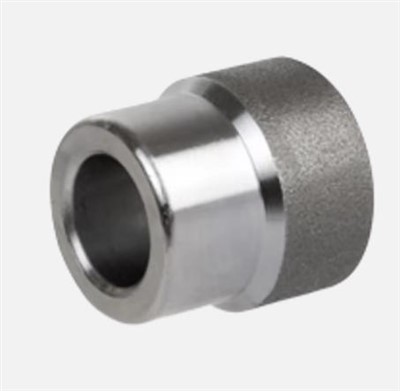
To fit larger and smaller pipes with a link, Bushings fittings are relied on to connect sizes together.
Flanges
Flanges are pipe fittings that work to connect together pipes, valves, flanges engines, and other sections for a full, well-running network.
Tees and crosses
When a pipe fitting has more than one opening, it's either a tee or across. With tees, there are three openings, with one inlet and two outlets. This is ideal to merge the flow of two inlets with one outlet. On the other hand, crosses have four openings in four different directions.
Caps and plugs
To simply differentiate between the two, a cap doesn't have threading while a plug does. A cap is best for stopping low-pressure water, while when pressure is high, a plug is utilized for a tighter, secure screw.
Pipe Fittings Production Process
1.Raw material selection:
The first step in the manufacturing process is selecting the appropriate raw material, typically high-quality metal alloys like carbon steel, stainless steel, or nickel alloys. Raw material selection is typically done by purchasing the material from suppliers or by sourcing the raw material in-house.
2.Heating:
The raw material is heated to a temperature that softens it and makes it malleable. The temperature varies depending on the type of material being used. Heating is typically done using a furnace or induction heating equipment.
3.Forging:
The heated metal is then placed in a forging press, where it is compressed and shaped using high-pressure and specialized dies. Forging presses can be hydraulic, mechanical, or pneumatic depending on the size and complexity of the product being manufactured.
4.Trimming:
After the forging process, the excess material is trimmed off to create a finished product. Trimming can be done using a variety of tools including saws, grinders, and shears.
5.Machining:
If necessary, the forged pipe fittings may undergo further machining to create specific shapes or features. Machining is typically done using lathes, mills, or drilling machines.
6.Inspection:
The finished fittings are inspected to ensure they meet quality standards and specifications. Inspection can be done using a variety of tools including calipers, micrometers, and ultrasonic testing equipment.
Pipe Fittings Inspection Standards
Appearance inspection is mainly to inspect the appearance of pipe fittings, including surface quality, no defects, no obvious deformation, etc. For welded connecting pipe fittings, the appearance of the weld should also be inspected. Among them, the overall dimensions should meet the requirements, and there should be no obvious burrs, cracks, warping, wrinkles and other surface defects.
Physical and mechanical performance testing mainly tests the strength of pipe fittings, including yield strength, tensile strength, impact toughness, etc.
Chemical composition analysis mainly analyzes the materials used in pipe fittings. Through chemical analysis, we can understand the composition of the material in detail and can detect the presence of impurities and undesirable ingredients.
Wall thickness measurement and dimensional accuracy inspection are mainly to detect whether the dimensional accuracy and wall thickness of pipe fittings meet the design requirements. Among them, the wall thickness measurement error should not exceed 5% of the allowable deviation of the pipe wall thickness.
The corrosion resistance test mainly tests the corrosion resistance of the materials used in pipe fittings. The corrosion properties of pipe fitting materials are tested through chemical tests and electrochemical methods to understand the corrosion resistance of pipe fittings under different usage conditions.
Coating quality inspection is mainly for pipe fittings with special coatings. Mainly includes testing of coating thickness, adhesion, corrosion resistance, etc.
Application of Pipe Fittings
Oil and gas industry:
The oil and gas industry relies heavily on pipelines to transport crude oil, natural gas, and refined products. Pipe fittings are essential for constructing and maintaining these pipelines, which often span vast distances. Any leakage or failure can result in environmental disasters and economic losses.
01
Chemical processing:
In chemical plants, a variety of corrosive and hazardous substances are transported through pipelines. Specialized pipe fittings made from materials like stainless steel or Teflon are essential to ensure the safe transport of these chemicals without contamination or leaks.
02
Water treatment and distribution:
In the field of water treatment and distribution, pipe fittings are indispensable. They enable the distribution of clean drinking water to communities and ensure the safe transfer of wastewater for treatment.
03
Power generation:
Power plants rely on pipelines to transport water, steam, and gases to generate electricity. Properly selected and maintained pipe fittings are crucial for the safe and efficient operation of these facilities.
04
Pharmaceutical industry:
The pharmaceutical industry has stringent requirements for purity and sanitation. High-quality, sanitary pipe fittings are used to transport pharmaceutical ingredients without contamination, ensuring the safety and efficacy of the products.
05