




Flanges
Sino Special Metal Co., Ltd: You Professional Flanges Manufacturer!
Our company is a leading manufacturer of specialty steel products, serving industries such as automotive, water and wastewater treatment, petrochemical, oil and gas, and construction. Our product line includes pipes/tubes, flanges, plates, bars, and fittings.
Why choose us?
Wide range of applications
Our wide range of products is used in a variety of industries including renewable energy, wind power plants, oil and gas industry, onshore, offshore and refineries more.
Quality Assurance
Our products are manufactured using the finest materials and undergo rigorous quality control measures to ensure they meet the highest quality standards.
Wide Range of Material Options
We specialize in the production of a diverse array of products using premium material grades such as Hastelloy, Inconel, Incoloy, Monel, Duplex, Stainless Steel, Alloy Steel, Carbon Steel, Titanium and many more.
Professional Technical Team
Our company has a team of highly skilled and dedicated professionals committed to providing fast and reliable service at an affordable price.


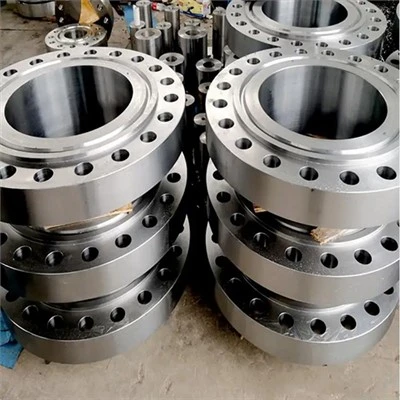
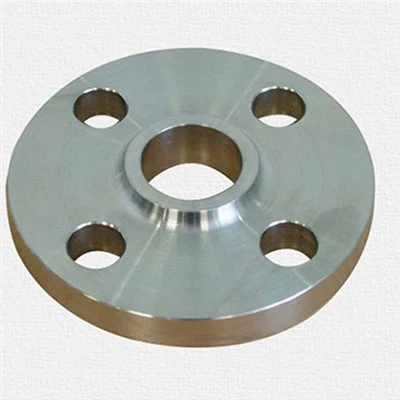


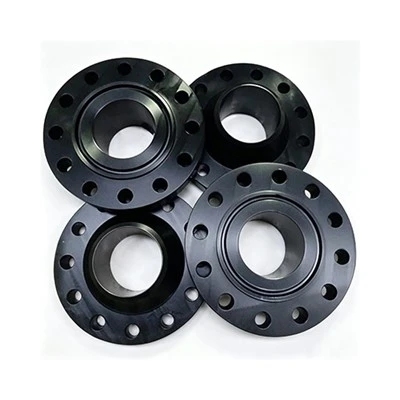


Types of Flanges
Slip-on flanges
The slip-on flange is a ring (with or without a hub) placed over the pipe’s end. The flange face extends from the end of the pipe by a sufficient distance to apply a welded bead to the inner diameter.
Weld neck flanges
Weld neck flange is also known as a high-neck flange or tapered hub flange. The weld neck flange has a neck that can properly transfer the pipe tension.
Socket weld flanges
The socket weld flanges are connected on the outside just by a fillet weld. It is often not advisable for critical services. These are useful for the small-bore lines in your system.
Blind flanges
The production of blind flanges happens without a bore and is utilized to blank off the ends of pressure vessel openings, valves, and pipes.
Lap joint flanges
Lap joint flanges are useful with stub ends when the pipe is made of expensive material. E.g., a carbon steel flange can be added to the stainless steel pipe system as the flanges do not come into contact with the substance in the pipe.
Threaded flanges
Threaded flanges look identical to slip-on flanges, but the key difference is that the threaded flange is bored out to match the inside diameter of the particular pipe.
Flanges Manufacturing Materials
|
Dimensions |
Base Material |
Pressure Rating |
|
ASME B16.5 |
ASTM A182 (Forgings) ASTM A240 (Plate) |
150#. 300#. 400#. 600#. 900#. 1500#. 2500#. |
|
API 605 |
ASTM A182 (Forgings) ASTM A240 (Plate) |
150#. 300#. 400#. 600#. 900#. 1500#. 2500#. |
|
ASME B16.47series A & B |
ASTM A182 (Forgings) ASTM A240 (Plate) |
150#. 300#. 400#. 600#. 900#. 1500#. 2500#. |
|
EN1092-1 |
ASTM A182 (Forgings) |
PN2.5. PN6. PN10. PN16. PN25. PN40. PN63. PN100. PN160. PN250. PN320. PN400. |
|
BS4504 |
BS970 (Bar)ASTM A240 (Plate) ASTM A182 (Forgings) |
PN2.5. PN6. PN10. PN16. PN25. PN40. PN63. PN100. PN160. |
|
BS10 |
BS970 (Bar)ASTM A240 (Plate) ASTM A182 (Forgings) |
Table D. Table E. Table F. Table H. Table J. Table K. Table R. Table S.Table T. |
Flanges Specifications in USA
|
Size |
1/2″ (15 NB) to 48″ (1200NB) DN10~DN5000 |
|
Standards |
ANSI/ASME B16.5, B16.47 Series A & B, B16.48, BS4504, BS 10, EN-1092, DIN, ANSI Flanges, ASME Flanges, BS Flanges, DIN Flanges, EN Flanges, GOST Flange, ASME/ANSI B16.5/16.36/16.47A/16.47B, MSS S44, ISO70051, JISB2220, BS1560-3.1, API7S-15, API7S-43, API605, EN1092 |
|
Pressure Rating ANSI |
Class 150, Class 300, Class 400, Class 600, Class 900, Class1500, Class 2500 |
|
Pressure Calculation in DIN |
6Bar 10Bar 16Bar 25Bar 40Bar / PN6 PN10 PN16 PN25 PN40, PN64 |
|
UNI |
6Bar 10Bar 16Bar 25Bar 40Bar |
|
EN |
6Bar 10Bar 16Bar 25Bar 40Bar |
|
Coating |
Oil Black Paint, Anti-rust Paint, Zinc Plated, Yellow Transparent, Cold and Hot Dip Galvanized |
|
Test Certificates |
EN 10204/3.1B |
|
Production Technique |
Forged, Heat treated and machined |
|
Connect Type/ Flange Face Type |
Raised Face (RF), Ring Type Joint (RTJ), Flat Face (FF) |
|
Special design |
As per your drawing AS, ANSI, BS, DIN and JIS |
|
Test |
Direct-reading Spectrograph, Hydrostatic testing machine, X-ray detector, UI trasonic flaw detector, Magnetic particle detector |
|
Equipment |
Press machine, Bending machine, Pushing Machine, electric bevelling machine, Sand-blasting machine etc |
|
Material |
Inconel Slip On Flange, Incoloy Slip On Flange, Monel Slip On Flange, Hastelloy Slip On Flange, Copper Nickel Slip On Flange, Alloy 20 Slip On Flange, Nickel Alloy Slip On Flange, AISI 4130 Slip On Flange, Titanium Slip On Flange, Brass Slip On Flange, Stainless Steel Slip On Flange, Duplex Steel Slip On Flange, Super Duplex Slip On Flange, SMO 254 Slip On Flange. |
|
Material Test Certificates (MTC) as per EN 10204 3.1 and EN 10204 3.2, Test Certificates certifying NACE MR0103, NACE MR0175 |
|
Advantages of Flanges

1.Flanges provide better flexibility
Chances are you have pipelines in some hard-to-reach areas. You need more flexibility in those locations without the need for adapters. Flanges keep you from using adapters in pipes while providing much-needed flexibility.
2.They fit well in tight spaces
Many pipelines deal with tight spaces. Traditional flange fittings are easy to assemble in areas where a wrench does not have clearance. They are simply assembled with moderate torque, making them easier to fit in tight spaces.


3.Flanges provide easy maintenance
A connection using flanges makes maintenance much easier. This is particularly true for rigid lines in continuous pipes and metal tubes. Flanges also afford easy disconnecting, reconnecting, and zero-clearance assembly for better maintenance of manifold, tube, and hose connections.
4.Flange connections and fittings aren’t likely to loosen
When compared with standard hydraulic fittings, flange connections and fittings are less prone to loosening. They also decrease the likelihood that other components become loose during demanding hydraulic applications. Instead, they provide a better load distribution by effectively clamping around a flange head.

Uses of Flanges
Manufacturing industries:
For instance, the presence of flanges in injection molding machines, plays a vital role in the mold-making process. They provide secure connections at the joints of, equipment like hydraulic and pneumatic systems and mold attachment. Proper connections allow for control and facilitate precise alignments among other factors.
Power generation:
In power generation facilities like hydroelectric and power plants, flanges serve critical purposes. They guarantee strong and secure connections at the joints of pumps, turbines, and other available machinery.
Water and wastewater treatment:
Flanges are extensively used in sewer systems and water treatment plants. They establish connections between, pumps, pipelines, and other equipment.
Food and beverage industry:
Stainless steel pipes are prevalent in the food and beverage industry due to their hygiene, cleanliness, and resistance to corrosion. They are used for conveying food products, beverages, and dairy products, as well as for process piping in breweries, wineries, and food processing plants.
Pharmaceutical industry:
Stainless steel pipes play a crucial role in pharmaceutical manufacturing and processing. They are used for transferring fluids, chemicals, and pharmaceutical ingredients while maintaining a sterile and hygienic environment.
Construction and architecture:
Stainless steel pipes are utilized in architectural and construction projects for structural purposes, handrails, façades, and decorative elements. They offer durability, aesthetic appeal, and resistance to environmental factors, making them suitable for both interior and exterior applications.