


A182/A182M Heat Treating Requirements
ASTM A182/A182M is the standard specification issued by the American Society for Testing and Materials (ASTM International) for forged or rolled alloy and stainless steel pipe flanges, forged fittings, and valves and parts for high-temperature service. The "Heat Treating Requirements" in A182/A182M refer to the specifications for heat treatment processes applied to these steel forgings.
Heat treating is a process of heating and cooling steel to alter its microstructure and properties. Its primary purposes include changing the hardness, strength, toughness, and corrosion resistance of the steel to meet specific engineering requirements. In the manufacturing of high-temperature and high-pressure industrial steel forgings, appropriate heat treatment can enhance their durability, fatigue resistance, corrosion resistance, and other critical properties, ensuring safe and reliable operation in harsh working environments.
Common heat treatment processes include normalization, quenching, tempering, annealing, solution annealing, etc. Each process has specific requirements for heating temperature, soaking time, cooling rate, etc., to control the steel's microstructure and properties to meet design requirements.
In summary, heat treatment allows for the adjustment of steel properties to enhance its suitability for different engineering applications, ensuring the production of high-quality steel forgings that meet both standard specifications and customer requirements.
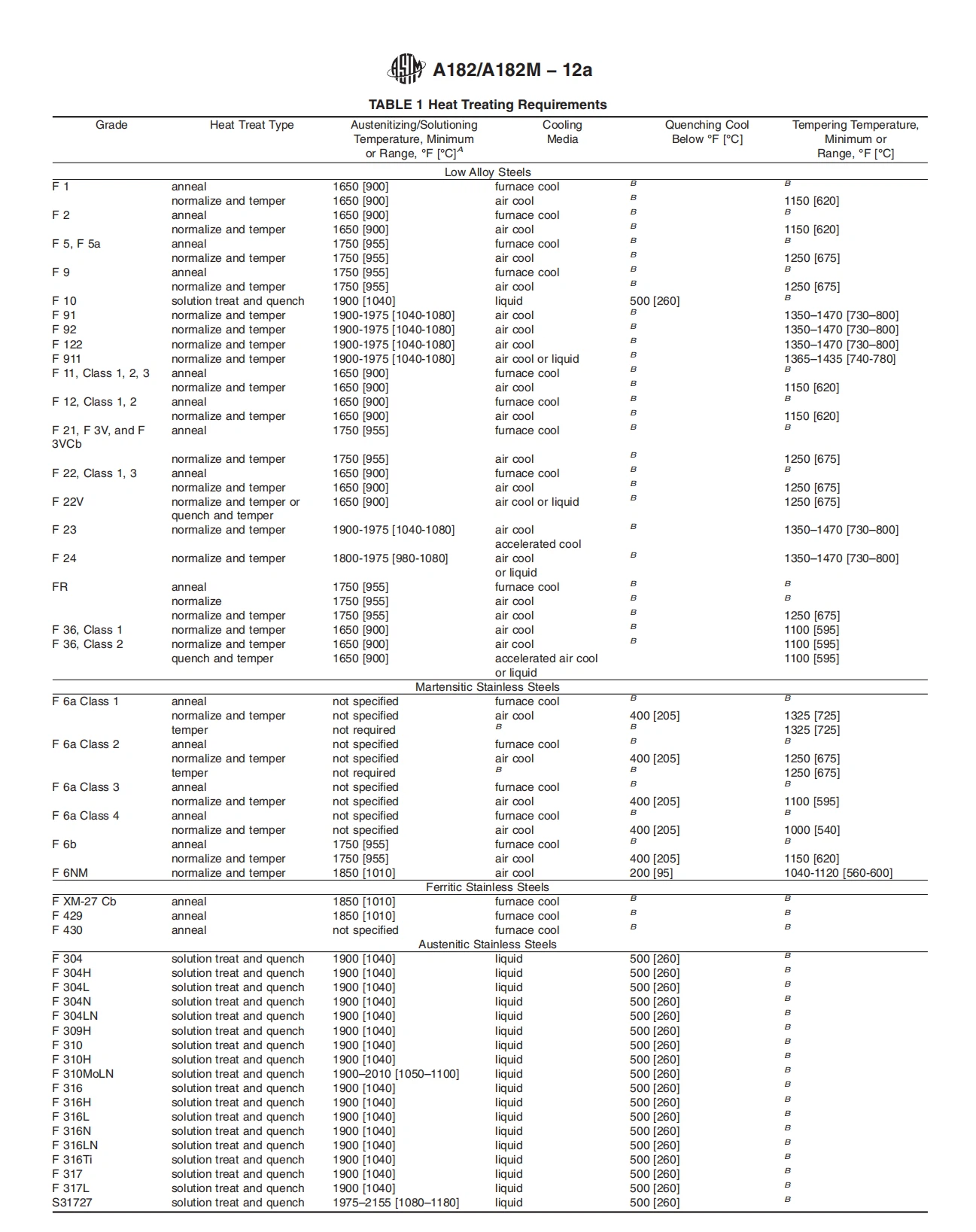
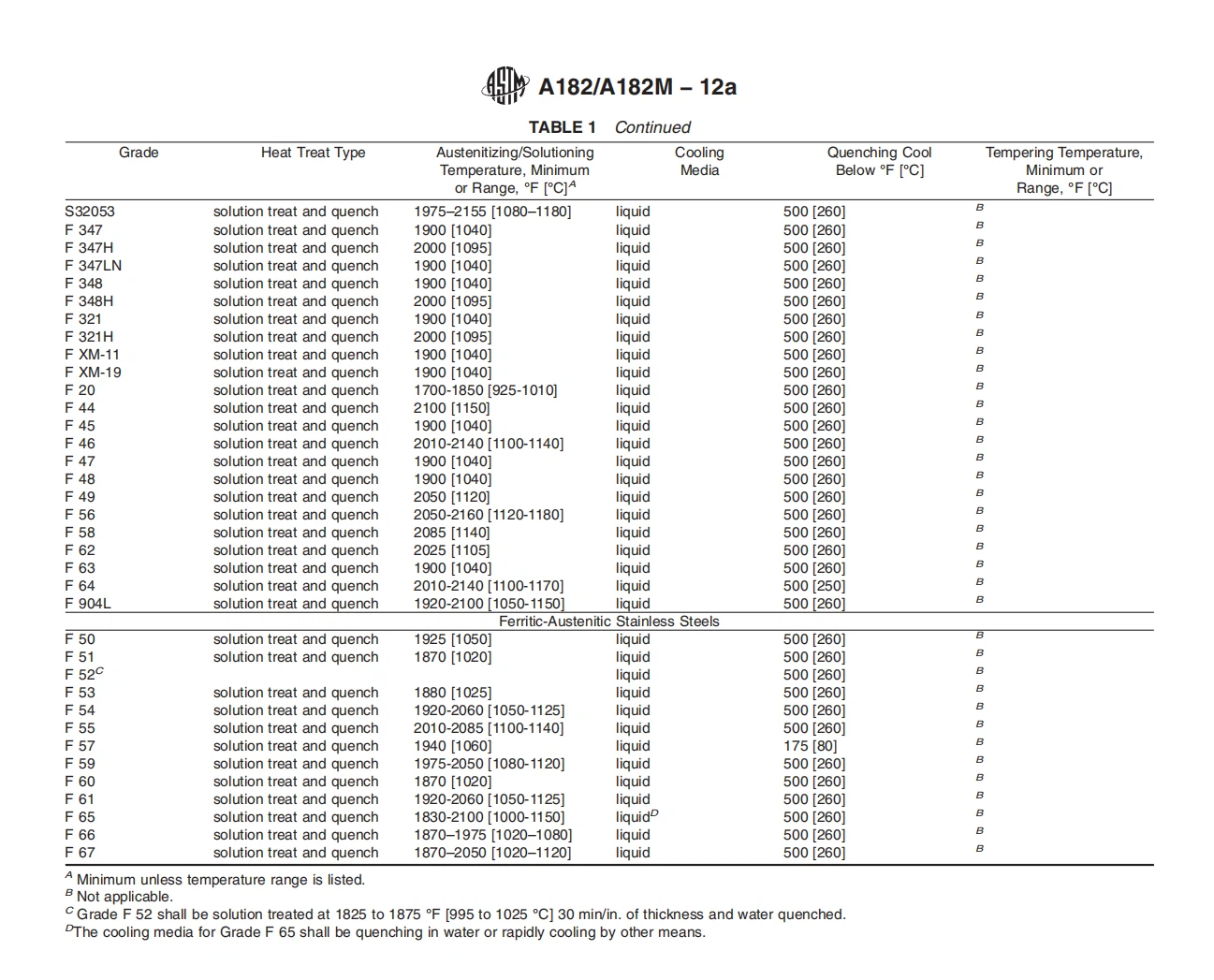
Common heat treatment processes include:
1. Normalizing:
Heating the steel to an appropriate temperature and then cooling it in air to relieve internal stresses and improve toughness and strength.
2. Quenching:
Heating the steel to a critical temperature and then rapidly cooling it, typically using water, oil, or gas media, to rapidly solidify the steel, increasing its hardness and strength.
3. Tempering:
Reheating the quenched steel to a lower temperature, holding it for a certain time, and then cooling it, aiming to reduce hardness while improving toughness and resistance to brittleness.
4. Annealing:
Heating the steel to a sufficiently high temperature and then gradually cooling it to promote grain recrystallization, improving plasticity, workability, and relieving internal stresses.
5. Solution Annealing:
Primarily used for stainless steel and high-temperature alloys, solution annealing involves heating the steel to the solution temperature, followed by rapid cooling to dissolve solid alloying elements and eliminate precipitates, thereby enhancing corrosion resistance and mechanical properties.
Each of these processes has specific requirements for heating temperature, soaking time, cooling rate, etc., to control the steel's microstructure and properties to meet design requirements.


