




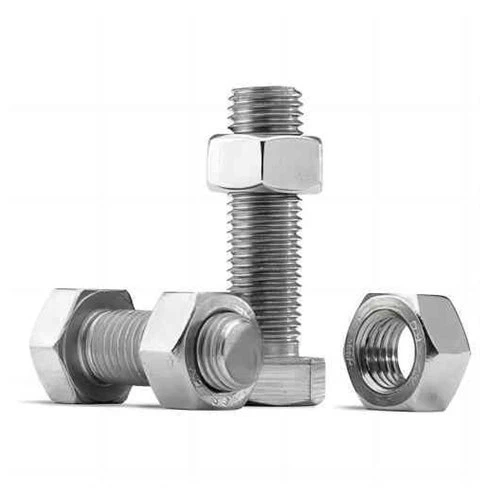
Stainless Steel Fasteners
We are capable of producing products inf a wide range of material grades, such as Hastelloy, Inconel, Incoloy, Monel, Duplex stainless steel, Stainless steel, Alloy steel, Carbon steel, Titanium, and many more. This diverse range of materials allows us to cater to the specific needs of various industries. With this extensive product range, SSM is equipped to provide integrated piping solutions that meet the unique requirements of our customers.
At SSM, we are committed to meeting all of our clients' integrated piping solutions development needs, including customized jobs, by delivering high-quality products and services.

Why Choose Us
01
Quality Products
We use only the highest-grade materials and advanced manufacturing techniques to produce products that are reliable, durable, and perform to the highest standards.
02
Experienced Team
Our team of engineers and technicians has years of experience in the industry, and we leverage that expertise to provide our clients with the best possible solutions.
03
Exceptional Customer Service
We pride ourselves on providing exceptional customer service and technical support to our clients, ensuring that they have a smooth and hassle-free experience.
04
Continuous Innovation
We are constantly investing in research and development to stay ahead of the curve and deliver cutting-edge solutions to our clients.


What is Stainless Steel Fasteners?
Stainless Steel Fasteners with Addition of other elements such as nickel, molybdenum and is a general practice to induce other important properties like corrosion resistance at higher temperatures thereby introducing heat resistance.
Stainless steel is used extensively throughout industry for both original equipment manufacture as well as for replacement. Stainless steel is a family of iron-based alloys containing about 10.5% chromium or more, plus other alloying elements such as nickel, manganese, molybdenum, sulfur, selenium, titanium, etc. The chromium is chiefly responsible for corrosion and heat resistance; the other alloying elements are present in stainless steel to enhance corrosion resistance and to impart certain characteristics with respect to strength and fabricability.
Benefits of Stainless Steel Fasteners
Corrosion resistance
One of the best benefits with stainless steel fasteners is their resistance to corrosion. Construction projects should be built to last, and, by offering premium corrosion resistance with component parts, your stainless steel fasteners from ensure a strong hold for years to come.
Strength year-round
Because stainless steel fasteners also do not lose any of their integrity due to high or low temperatures, they make a great choice of fastener for projects located anywhere, year-round. From the high heat of the summer to the frigid lows of winter, our stainless steel fasteners hold strong.
Long-term savings
With the hardiness that stainless steel fasteners provide, they can be replaced less frequently than others. Although their up-front cost might be more than others, stainless steel fasteners give a dependable, low-maintenance hold that you can count on for much longer.
A better appearance
Although it doesn't add to the strength of the build, the appearance of stainless steel fasteners is an advantage for some to consider as well. Because they are rust, corrosion, and scratch resistant, these fasteners will stay visually-appealing for much longer than others no matter where they are used. If appearance matters to your construction project, stainless steel fasteners is the way to go.
Five Primary Classifications of Stainless Steel
Austenitic Stainless Steels
Austenitic stainless steels are chromium-nickel-manganese and chromium-nickel compositions identified by 200 and 300 Series numbers. They can only be hardened by cold work and are non-magnetic in the annealed condition. Typical of the austenitic group is Type 304, which contains nominally 18% chromium and 8% nickel.
Ferritic Stainless Steels
Ferritic stainless steels are straight grade chromium magnetic steels in the 400 Series that cannot be hardened by heat treatment and only slightly hardened by cold working. Type 430 is typical of this group.
Martensitic Stainless Steels
Martensitic stainless steels are straight grade magnetic chromium 400 Series that can be hardened by heat treatment only. Type 410 is typical of this group.
Precipitation Hardening Stainless Steels
Precipitation Hardening stainless steels are hardened by a combination of a low-temperature aging treatment and cold working. UNS numbers only, e.g. Type S17400, identifies them although many are referred to in literature by proprietary trade names such as 17- 4PH. The precipitation hardening stainless steels are especially useful because fabrication can be completed in an annealed condition and uniform hardening achieved without a high-temperature treatment that may result in distortion and scaling.
Duplex Stainless Steels
Duplex stainless steels are characterized by their high yield strength, which is twice that of the annealed yield strength of typical austenitic stainless steels, like 304 and 316. Usage of both Duplex stainless steel should be limited to temperatures below 570° F as extended elevated temperature exposure can embrittle this material.
Super-Austenitic Stainless Steels
Super-Austenitic stainless materials should be given consideration in those cases where aggressive chloride environments are encountered. They have higher nickel and molybdenum contents for improved pitting and crevice corrosion resistance.
Types of Stainless Steel Fasteners
Nails
Nails have been commonly used in households for wood construction since ages. They are popular for easy usability, though the strength of the nail isn't as good as screws. It is popular because of its shear strength.
01
Stainless Steel Nuts & Bolts
It is a pair of stainless steel bolts & nuts that work together to hold the object. From one end a bolt is inserted into the material and then from the other end the bolt is secured with a nut.
02
Anchors
They are mainly used to connect an object to drywall or concrete. These fasteners are called anchors because of the similarity of the function it shares with a boat's anchor, which is to stop the ship from drifting off into the water.
03
Rivets
Unlike the other fasteners, Rivets aren't removable. They create a permanent connection between the material. Their head is cylindrical & the tail can be expanded at the needed length using the rivet tool.
04
Stainless Steel Screws
People usually use the terms stainless screw and SS fasteners interchangeably, unaware that Stainless Steel Screws are one of the types of SS fasteners.
05
Stainless Steel Fasteners Uses
Stainless steel fasteners are a vital component in a wide array of industries and applications. Known for their exceptional strength, durability, and corrosion resistance, these fasteners play a crucial role in ensuring the structural integrity and longevity of various products.
Construction: Stainless steel fasteners are frequently used in the construction industry for structural applications such as securing beams, columns, and other critical components. They are also used in roofing, cladding, and facade installations.
Automotive Industry: Stainless steel bolts, screws, and nuts are utilized in the automotive industry for assembling various vehicle components, including engine parts, exhaust systems, and chassis elements. Their corrosion resistance is crucial for withstanding harsh weather conditions and road salt.
Petrochemical and Oil & Gas: They are employed in the petrochemical and oil & gas industries due to their ability to resist corrosion caused by exposure to various chemicals and harsh environments. They secure pipelines, processing equipment, and offshore structures.
Food Processing: In food processing plants, stainless steel fasteners are used in equipment and machinery that come into contact with food products. They are preferred because they are easy to clean and resist corrosion, ensuring the safety and hygiene of the food processing environment.
Electronics: Stainless steel screws, nuts, and bolts are used in the electronics industry for assembling components and securing equipment due to their resistance to corrosion and electrical conductivity.
Manufacturing Process of Forged Stainless Steel Fasteners
The manufacturing process of forged stainless steel fasteners involves several steps, which include:
Raw material selection: The first step in the manufacturing process is to select high-quality raw materials. Stainless steel is the primary material used to make forged stainless steel fasteners, and it should be selected based on its composition, quality, and strength.
Heating: The raw material is heated to a high temperature, typically between 1100°C and 1200°C, in a furnace. Heating the metal to this temperature makes it more malleable and easier to shape.
Forging: Once the metal has reached the desired temperature, it is placed on a forging press, which applies pressure to shape the metal into the desired shape. The process of forging involves shaping the metal by hammering, pressing, or rolling it into the desired shape.
Heat Treatment: After the forging process, the metal is subjected to heat treatment to make it stronger and more durable. The heat treatment process involves heating the metal to a high temperature and then cooling it down rapidly. This process is known as quenching, and it helps to align the grain structure of the metal, making it stronger and more resistant to corrosion.
Machining: After heat treatment, the metal is machined to the final shape and size of the fastener.
Tips for Keeping Stainless Steel Fasteners in Good Condition
Choose Fasteners that have a Corrosion-resistant Coating
Abrasive steel fasteners tend to accumulate tiny particles that can damage the protective chromium oxide coating, making the fastener discolored and rusted. Stainless steel fasteners, on the other hand, will corrode less easily because they have a smooth surface. If you are concerned about corrosion, choose stainless steel fasteners that have been electroplated.
Should use Proper Stainless Steel Grade
The life span of fasteners depends on the quality of grade we use. So stainless steel has several types of grades of which 304 and 316 are the most common grades. Also, 316 grade is not that much affected by tarnishing. The fasteners should be used in humid environments such as coastal environments or on boats and marine applications especially grade 316.
No Possibility of Contamination
Stainless Steel 304 Fasteners get contaminated working tools which leads to rusting. Using tools made of materials suitable for preventing corrosion and using stainless steel fasteners will help you avoid corrosion. To avoid contamination on the job site, wrap stainless steel fasteners in plastic.
Avoid Contact with Other Metals as Much as Possible
Corrosion by galvanic action occurs when dissimilar metals come in contact and cause a corrosive reaction. Galvanic corrosion is more likely in wet stainless steel fasteners. To reduce the possibility of rust, use rubber or nylon separators to protect other metals from coming into contact with stainless steel.
Reduce Rainwater Exposure
Stainless steel is protected by a layer of chromium oxide from corrosion by pollutants. As a result of the iron in the stainless steel reacting with oxygen, the fastener rusts. By exposing steel fasteners to rainwater, contaminants may be washed away and the protecting oxide layer coating can be restored. For corrosive locations where rainwater will not be present, use corrosion-resistant stainless steel, and choose fasteners with a smooth surface or electro-polished fasteners.
Regular Lubrication is Required
When working with stainless steel fasteners, galling, which happens when the threads stop up, is a serious concern. Nyloc nuts, as well as large threaded fasteners, are more prone to thread lockup. Lubricate threads regularly to keep them from locking.
Keep a Routine Deep Cleaning
Regular cleaning will help to extend the life span of stainless steel fasteners. Moisture content control may aid in removing contaminants as well as the protection of stainless steel surfaces and fasteners against corrosion. Remove dust and dirt regularly to keep maintenance, as well as the expenses connected with it.
Stainless Steel Fasteners Maintenance
There are numerous upsides to using stainless steel fasteners in your work. Even though they may be affordable and anti-corrosive, these properties will only last if you take proper care. Even the best of frameworks can break down with the wrong work habits.
If you look at an offer of stainless steel fasteners, they will come in different grades. The most common ones are 304 and 316. The higher the number, the more corrosion-resistant the steel is. For this reason, you should always opt for the higher grade. The price may be higher, but the increased corrosion resistance is worth the extra cost.
Before you assemble the threads, you should lubricate the stainless steel fastener threads. If you don't lube the threads, a process called galling occurs. This is when some of the material gets scratched by the contacting surfaces. When force is applied, there will be excessive wear and tear over time.
Finishing a project and leaving it is not the end of the work. Fasteners can lose grip in certain places over time. This is not a problem if it's prevented in time, but if you leave it unresolved, the defect can wreak havoc on a large scale. This is why you need need to employ staff to periodically check on the work you've done.
Stainless steel fasteners are extremely durable if you take proper care over longer periods of time. However, neglect and the influence of the elements can shorten their lifespan considerably. Most importantly, the fasteners and the area around them need to be cleaned regularly. Letting dust settle all over the surface will not only damage the fasteners, but also the fastinng tools near them.
Our Factory
Sino Special Metal (SSM) is a highly respected and reputable manufacturer, distributor, and stockist of a wide range of industrial products, including Pipes, Pipe Fittings, Flanges, Bolts, Round Bar, Steel Plate, Welding Wire, Steel Prefabrication, and more. With over 30 years of experience in special metal product development, manufacturing, and marketing, SSM has established itself as a leading provider of integrated piping solutions to a diverse range of industries worldwide.
FAQ
Hot Tags: stainless steel fasteners, China stainless steel fasteners manufacturers, suppliers, factory, alloy bolts and nuts, duplex bolts, duplex stainless steel bolts, monel 400 bolts, Nickel Alloy Fasteners, stainless steel bolts
You Might Also Like

Send Inquiry